Nashville Tourist Map: Navigate Top Attractions Like a Pro


A tourist map of Nashville is a neighborhood-by-neighborhood guide to Music City's most visited landmarks, dining corridors, and cultural institutions, organized so you can plan a logical route rather than crisscrossing the city all day. Nashville's top attractions cluster into three walkable zones anchored by Lower Broadway, with secondary clusters in Midtown, The Gulch, and North Nashville reachable in under 15 minutes by rideshare or the city's hop-on trolley network.
Lower Broadway is the undisputed anchor: the Ryman Auditorium (116 Rep. John Lewis Way), the Country Music Hall of Fame (222 5th Ave S), and Hatch Show Print (224 5th Ave S) form a single walkable cluster you can cover in one morning.
The Old Town Trolley covers 13 stops from Marathon Motor Works to Centennial Park, making car-free sightseeing genuinely practical across Nashville's spread-out geography.
WeGo Route 18 runs from Nashville International Airport (BNA) to downtown for $2 per ride, cutting the typical ground transportation cost significantly.
Crowd timing matters more than most visitors realize: the Country Music Hall of Fame draws the longest lines between 11am and 2pm; arriving at 9am or after 3pm saves 30 to 45 minutes of waiting.
Accessibility gaps exist on the trolley route: several stops require navigating uneven historic sidewalks, and the Ryman Auditorium has limited accessibility options in its oldest seating sections.
In 2026, Nashville's visitor infrastructure has expanded: the SoBro corridor near The Gulch now has dedicated pedestrian signage connecting it to Lower Broadway in about 10 minutes on foot.

Nashville receives millions of visitors each year, and the gap between a frustrating first-timer experience and a genuinely great trip usually comes down to one thing: knowing how the city's geography actually works before you arrive. Most visitors land on Broadway, walk east to west, and miss entire neighborhoods that locals consider the best parts of Music City.
This guide organizes Nashville's attractions the way locals navigate them: by walkable cluster, then by neighborhood, then by how to string multiple areas into a half-day or full-day route. You will also find specific timing advice, a planning table with cost estimates and visit durations, and accessibility notes that most tourism resources skip entirely. For a broader orientation to the city, the Nashville Travel Guide covers seasonal context, event calendars, and trip-planning logistics in more depth.
Whether you are planning a bachelorette weekend, a family vacation, or a solo music pilgrimage, the sections below will help you use any tourist map of Nashville more effectively than the map itself.
What Is the Main Tourist Street in Nashville?
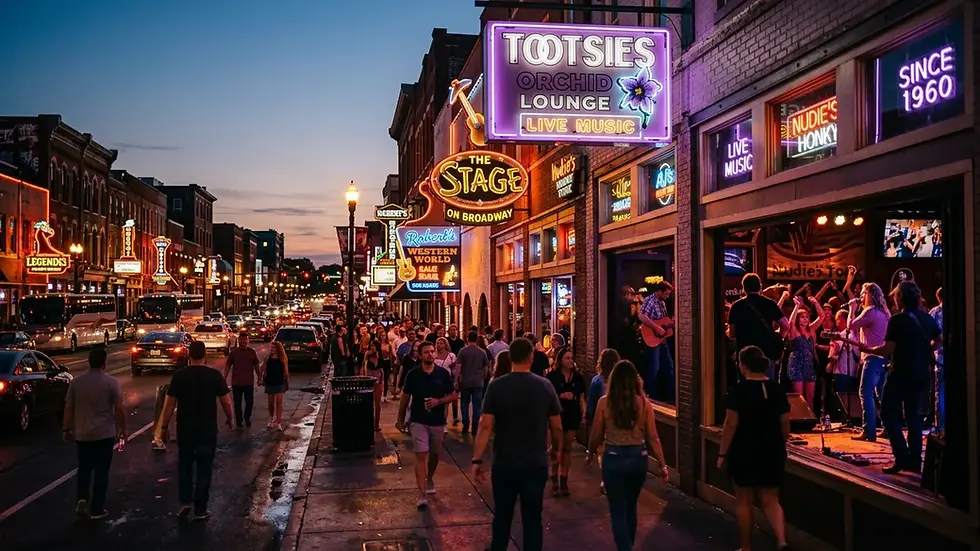
Lower Broadway is Nashville's main tourist street, a six-block stretch running from 1st Avenue to roughly 7th Avenue that contains the city's highest concentration of live music venues, honky-tonk bars, souvenir shops, and nationally recognized restaurants. The street is pedestrian-friendly, open to foot traffic at all hours, and serves as the geographic anchor for nearly every tourist map of Nashville published by official tourism sources.
Specifically, the block between 4th Avenue and 2nd Avenue on Broadway contains the most activity. Robert's Western World at 416 Broadway is the go-to for genuine country music without a cover charge. Tootsie's Orchid Lounge at 422 Broadway has been serving cold beer and live music since 1960. Both venues are unapologetically touristy, but the music is real and the atmosphere is hard to replicate anywhere else.
Walk one block south from Broadway onto Demonbreun Street and you reach the gateway to the SoBro neighborhood, where the Country Music Hall of Fame anchors a cluster of music-industry institutions. Walk one block north and you are in the historic Nashville Arcade, a Victorian-era covered shopping passage built in 1903 that most first-time visitors walk right past.
One honest caveat: Broadway on a Friday or Saturday night between 9pm and 2am is extremely crowded, loud, and genuinely hard to navigate in large groups. If your priority is hearing the music rather than being part of the scene, visit on a Tuesday or Wednesday evening when the same bars have full bands and a fraction of the crowd. Locals who want Broadway's energy without the crush pick Sunday afternoons, when the honky-tonks are full but walkable.
What Should I Not Miss in Nashville?
The attractions visitors most often regret skipping in Nashville are the Ryman Auditorium, the Country Music Hall of Fame and Museum, and at least one neighborhood beyond Lower Broadway, specifically The Gulch or 12South. These three experiences represent the city's music heritage, its curatorial depth, and its contemporary local culture in a way that a Broadway bar crawl alone cannot.
The Ryman Auditorium: More Than a Concert Hall
The Ryman Auditorium at 116 Rep. John Lewis Way is known as the Mother Church of Country Music, and that reputation is not hyperbole. The original wooden pew seating, the exposed brick walls, and the acoustics built for 19th-century revivals make it unlike any other music venue in the country. Daytime tours run most mornings and cost around $20 to $30 depending on the tour type. If you can catch a show here, do it. Reviewers consistently describe the Ford's Lounge VIP passes as worth the upgrade for better sightlines and access. Check the Ryman schedule here before your trip.
Country Music Hall of Fame: Budget Three Hours Minimum
The Country Music Hall of Fame and Museum at 222 5th Ave S is legitimately massive. Most visitors who rush it in 90 minutes leave wishing they had stayed longer. Buy tickets online in advance to skip the box office line. The museum offers a veteran discount, and the on-site parking garage runs significantly cheaper than the nearby surface lots, which charge $35 or more for two hours. Plan your visit for a weekday morning if possible.
Hatch Show Print: A Working Letterpress Printshop
Hatch Show Print at 224 5th Ave S has been producing hand-letterpressed concert posters since 1879. The shop still operates as a commercial printer, which means the presses are running when you visit. Tours are available and inexpensive, and the retail section sells original prints starting around $30. This is one attraction where the lines are short, the experience is genuinely immersive, and almost every visitor leaves wanting more time.
One Neighborhood Beyond Broadway
The Gulch is a 10-minute walk or 5-minute rideshare from Broadway, and it represents what Nashville looks like beyond the tourist corridor. The neighborhood has converted warehouses, independent restaurants, and the Nashville Children's Theatre for families. If you have time for a second neighborhood, 12South's pedestrian-friendly commercial strip along 12th Avenue South offers locally owned boutiques and Hattie B's Hot Chicken at 112 19th Ave S, which lives up to the reputation if you are willing to wait 30 to 45 minutes on weekends.
Where to Walk Around Nashville During the Day
Nashville's most walkable daytime zones are Lower Broadway and the adjacent SoBro corridor, the Centennial Park area in Midtown, and the Germantown neighborhood north of downtown. Each zone offers a distinct experience and can fill two to four hours independently. The key to using any tourist map of Nashville effectively during daytime hours is matching your energy level and interests to the right zone.
The Broadway-to-SoBro Walking Cluster
Start at the Ryman Auditorium on Rep. John Lewis Way, walk south two blocks to the Country Music Hall of Fame, stop at Hatch Show Print next door, then continue to the Johnny Cash Museum at 119 3rd Ave S. This entire route covers roughly 0.8 miles and keeps you on or near Broadway the entire time. Add the Musicians Hall of Fame and Museum at 401 Gay Street if you are interested in the session players and producers behind the hits rather than just the headline artists.
The Assembly Food Hall on Broadway is a practical midday stop: 30-plus food vendors under one roof means large groups with conflicting cravings can all eat in the same place without negotiating a restaurant choice.
Centennial Park and the Parthenon
The Parthenon at 2500 West End Ave in Centennial Park is a full-scale concrete replica of the original Athenian temple, housing a 42-foot statue of Athena inside. The park itself is free to enter and genuinely beautiful in spring and fall. The surrounding Midtown neighborhood, accessible via the Old Town Trolley's Stop 2 at 27th Ave North, transitions into the Vanderbilt University campus within a few blocks, making it a pleasant 90-minute loop on foot. Guests staying at The Herman Haven, located 1.3 miles from Centennial Park, can reach the park in about 4 minutes by car or roughly 25 minutes on foot through residential streets.
Germantown: Nashville's Oldest Neighborhood
Germantown, about 1.5 miles north of downtown, is Nashville's oldest intact residential neighborhood, with restored Victorian-era homes dating to the 1870s and 1880s. The Nashville Farmers Market at 900 Rosa L Parks Blvd (Old Town Trolley Stop 12) anchors the area's daytime activity. The market runs year-round with food vendors, produce stalls, and a greenhouse section. It is genuinely a local destination rather than a tourist attraction, which means the crowds are manageable and the prices are fair.
At-a-Glance Nashville Attractions Planning Table
Attraction | Neighborhood | Estimated Visit Time | Cost Range | Walk from Broadway |
Ryman Auditorium | Downtown | 1-2 hours (tour) | $20-$30 | 0 min (on Broadway) |
Country Music Hall of Fame | SoBro | 2-3 hours | $25-$35 | 5 min |
Johnny Cash Museum | SoBro | 1-1.5 hours | $15-$20 | 8 min |
Hatch Show Print | SoBro | 45-60 min | Free (tour ~$20) | 6 min |
The Parthenon / Centennial Park | Midtown | 1-2 hours | Free (park) / $6-$10 inside | Drive/trolley (2 miles) |
Frist Art Museum | Downtown | 1.5-2 hours | $15-$20 | 12 min (919 Broadway) |
Tennessee State Museum | Downtown | 1.5-2 hours | Free | 15 min |
Nashville Farmers Market | Germantown | 1 hour | Free entry | Trolley/drive (2 miles) |
Cheekwood Estate and Gardens | West Nashville | 2-3 hours | $18-$25 | Drive (8 miles) |
Grand Ole Opry | Opryland | 2-3 hours (show) | $35-$100+ | Drive (9-12 miles) |
How to Navigate Nashville Without a Car: Trolley, Transit, and Apps
Getting around Nashville using public transit and the hop-on trolley network is practical for the downtown core but requires planning for destinations beyond Lower Broadway. The Old Town Trolley's 13-stop route covers the most visited tourist attractions, while WeGo public transit fills the gap for airport arrivals and neighborhood-specific destinations.
Old Town Trolley: The 13-Stop Route Explained
The Old Town Trolley Nashville operates a continuous loop with 13 stops, beginning at Marathon Motor Works (1300 Clinton St) and ending at Capitol View (1018 Nelson Merry St). Key stops for first-time visitors include Stop 9 at the Ryman Auditorium (116 Rep. John Lewis Way), Stop 7 at the Country Music Hall of Fame (501 Demonbreun St), Stop 6 at the Frist Art Museum/Union Station Hotel (1001 Broadway), and Stop 2 at Centennial Park (27th Ave North). A real-time trolley tracker is available at nsh.map.audiometours.com, which lets you check wait times before walking to a stop.
One important limitation: the trolley route does not reach East Nashville, 12South, or Germantown's restaurant corridor. For those neighborhoods, rideshare is the practical choice. Uber and Lyft both operate reliably in Nashville, and the downtown-to-12South ride typically costs $8 to $15 depending on time of day and surge pricing during events.
WeGo Route 18: Airport to Downtown for $2
The WeGo Transit Airport Service operates Route 18 between Nashville International Airport (BNA) and downtown for $2 per ride. The route runs along Airport/Elm Hill Pike and drops riders near the downtown core. For solo travelers or couples arriving without heavy luggage, this route cuts what can be a $30 to $45 rideshare fare down to essentially nothing. Contact WeGo at 615-862-5950 or visit wegotransit.com for current schedules, as timing changes seasonally.
Digital Map Tools Worth Using
Wanderlog (wanderlog.com) lets you build a custom Nashville itinerary by pinning attractions, restaurants, and hotels, then export the entire map to Google Maps for offline navigation. This matters practically because Google Maps offline mode works well in Nashville's downtown core, where cell signal can slow during large events. Visit Nashville's official printable resources at visitmusiccity.com include a Downtown Map, Neighborhoods Map, Downtown Parking Map, and a separate Opryland/Music Valley/Airport Map, all free to download before your trip.
Parking Reality Check
Downtown Nashville has more than 28,000 parking spaces, but the surface lots directly adjacent to Broadway charge $25 to $40 for event evenings. The Nashville Downtown Parking Guide and ParkItDowntown Nashville both map the cheaper structured garages within two to four blocks of the action. The Country Music Hall of Fame's own parking garage is consistently cheaper than the nearby surface lots, a detail the museum's ticketing page mentions but most visitors miss until they have already parked.

Nashville Neighborhood Map: Where Each District Fits in Your Itinerary
Nashville's neighborhoods each function as a distinct micro-destination on any tourist map of the city, and understanding their character helps you allocate time realistically rather than treating the city as one large downtown area. The Visit Nashville tourism board officially recognizes 22 named neighborhoods, but six of them account for the majority of visitor activity in 2026.
SoBro and Lower Broadway: Music History Central
SoBro (South of Broadway) runs from Broadway south to roughly Demonbreun Street and contains the Country Music Hall of Fame, Hatch Show Print, the Johnny Cash Museum at 119 3rd Ave S, and the growing food and entertainment corridor along Korean Veterans Boulevard. This is the highest-density cultural zone on any tourist map. Budget a full morning here if music history is your primary interest.
The Gulch: Industrial Aesthetic, Independent Restaurants
The Gulch sits about 0.3 miles southwest of Lower Broadway, and its character is genuinely different. The neighborhood developed around converted rail yards and warehouses, and the architecture reflects that industrial past. Saint Anejo on 12th Ave South is a reliable dinner choice with a serious tequila and mezcal selection. Guests staying at the Luxe Loft SoBro 916, which sits 0.3 miles from The Gulch, can walk this entire neighborhood and back to the apartment in under 20 minutes.
12South: The Walkable Local Neighborhood
Twelve South runs along 12th Avenue South between Linden Avenue and Kirkwood Avenue, and it reads as the neighborhood Nashville residents actually use. The strip has independent bookstores, coffee roasters, and Hattie B's Hot Chicken at 112 19th Ave S. For families, the Nashville Children's Theatre is a short drive away. The honest downside: weekend crowds on 12th Avenue can rival Broadway between noon and 3pm, particularly during spring and fall when the weather draws everyone outside.
East Nashville: Locally Loved, Underserved by Tourist Maps
East Nashville, across the Cumberland River, receives almost no coverage on standard tourist maps but contains some of the city's best independent restaurants and live music venues beyond Broadway. The neighborhood's main commercial corridors along Gallatin Avenue and Woodland Street are roughly 15 to 20 minutes from Lower Broadway by rideshare. If you are making the trip from a property like Underwood Manor, located 1.9 miles from downtown, East Nashville is actually a shorter ride than making a second lap of Broadway.
Music Row and Demonbreun: Industry Meets Tourism
Music Row refers to the stretch of 16th and 17th Avenues South where Nashville's recording studios and music publishers have operated since the 1950s. RCA Studio B, where Elvis Presley and Dolly Parton recorded, sits at 1611 Roy Acuff Pl and offers tours through Belmont University. The Gallery of Iconic Guitars (The GIG) at Belmont is located at 1907 Belmont Blvd and displays more than 500 historically significant instruments. Both attractions are a 5-minute drive from the Broadway core and rarely crowded.
Best Time to Visit Nashville Attractions: Crowd and Timing Guide
Knowing when to visit specific Nashville attractions is as important as knowing where they are, and this is the planning detail that tourist maps consistently omit. Crowd levels at the city's top sites follow predictable patterns by day of week and time of day, and adjusting your arrival by even two hours can transform a frustrating wait into a relaxed visit.
Country Music Hall of Fame: Arrive Early or Late
The Country Music Hall of Fame opens at 9am daily and the first hour is consistently the least crowded. Visitors who arrive between 9am and 10am report walking directly to exhibits without queuing. The longest lines form between 11am and 2pm, particularly on Saturdays from spring through fall. Buying tickets online in advance at countrymusichalloffame.org eliminates the box office wait entirely. The museum closes at 5pm, so an afternoon arrival after 3pm also works if you are willing to move quickly through the lower level exhibits.
Ryman Auditorium: Weekday Mornings for Tours
Ryman daytime tours draw smaller groups on Tuesday through Thursday mornings compared to weekends, when tour slots book out by mid-afternoon. If you are attending a show rather than a tour, the experience is genuinely better mid-week: the same performers, but the audience is smaller and the pew seating is easier to navigate. Arrive 20 minutes before doors open for shows to claim seats in the lower balcony, which has the best acoustics in the house.
Lower Broadway: Tuesday and Wednesday Win
Lower Broadway on a Tuesday or Wednesday evening between 7pm and 10pm offers the same live music as a Saturday night at roughly one-third of the crowd density. Tootsie's Orchid Lounge and Robert's Western World both have full bands on weeknights. The difference is you can actually get to the bar and hear the songs clearly. This is the single most useful timing tip on any tourist map of Nashville, and it is almost never printed on the map itself.
Cheekwood Estate: Spring and Fall, Weekday Mornings
Cheekwood Estate and Gardens at 1200 Forrest Park Dr offers 55 acres of botanical gardens and rotating art exhibitions. Spring is legitimately spectacular here, with tulip and cherry blossom displays running March through April. Weekday morning visits avoid the weekend family crowd. The drive from Lower Broadway takes approximately 20 minutes, so pair it with a morning departure and return downtown for an afternoon on Broadway.
Accessibility Guide: Which Nashville Attractions Are Wheelchair and Stroller Friendly
Accessibility information is almost entirely absent from standard Nashville tourist maps, which is a meaningful gap for visitors traveling with mobility considerations, young children in strollers, or elderly family members. As of 2026, the following is an honest summary of what you can expect at Nashville's major attractions and in its walkable zones.
The Country Music Hall of Fame is fully wheelchair accessible with elevator access across all floors and accessible restrooms throughout. The Ryman Auditorium has made accessibility improvements in recent years but the original 1892 pew seating is not wheelchair-accessible; the venue's accessible seating sections are limited, so call ahead at 615-889-3060 to confirm options before purchasing tickets. The Tennessee State Museum at 505 Deaderick St is free to enter and fully accessible, making it one of the best value, accessibility-friendly stops on any Nashville map.
For outdoor accessibility, Centennial Park has paved paths throughout most of the main areas, and the path to the Parthenon entrance is fully accessible. Bicentennial Capitol Mall State Park at 600 James Robertson Pkwy has wide paved walkways and is stroller-friendly. The Bicentennial Capitol Mall State Park is a genuinely underused attraction: a 19-acre outdoor history park with a 200-foot granite map of Tennessee and fountains that children can run through in summer.
Lower Broadway itself has uneven historic brick sidewalks in sections, and the gaps between some paving stones can catch wheelchair wheels or stroller tires. The side streets off Broadway are generally smoother. The Luxe Loft SoBro 916, located 3 blocks from Broadway, is listed as wheelchair accessible with same-level living and no stairs, which makes it a practical base for visitors with mobility needs who want a downtown location.
Frequently Asked Questions About Nashville's Tourist Map
What is the main tourist street in Nashville?
Lower Broadway is Nashville's main tourist street, running from 1st Avenue to approximately 7th Avenue in the downtown core. The strip contains Nashville's densest concentration of live music venues, including Tootsie's Orchid Lounge at 422 Broadway and Robert's Western World at 416 Broadway, plus entry points to the SoBro neighborhood where the Country Music Hall of Fame is located.
How do I get from Nashville airport to downtown without a car?
WeGo public transit Route 18 (Airport/Elm Hill Pike) runs between Nashville International Airport (BNA) and downtown Nashville for $2 per ride. The route drops riders near the downtown core and is a practical option for solo travelers or couples traveling light. Check current schedules at wegotransit.com or call 615-862-5950 before your trip.
What part of Nashville should tourists prioritize?
First-time visitors should prioritize Lower Broadway and the SoBro corridor for music history, then add one neighborhood beyond downtown, either The Gulch (closest, 10 minutes on foot) or 12South (best for food and local shopping). The Ryman Auditorium and Country Music Hall of Fame are the two attractions that appear on the most curated travel lists and genuinely reward the time invested.
Is Nashville walkable for tourists?
Nashville is walkable within the Lower Broadway-to-SoBro cluster, where the Ryman, Country Music Hall of Fame, Johnny Cash Museum, and Hatch Show Print are all within a 0.8-mile radius. Beyond that cluster, the city spreads out and rideshare or the Old Town Trolley becomes more practical. Centennial Park, Germantown, and the Grand Ole Opry all require transit or a car from the Broadway starting point.
How much time do I need at the Country Music Hall of Fame?
Budget a minimum of two hours and ideally three hours for the Country Music Hall of Fame at 222 5th Ave S. The museum has multiple floors with rotating exhibitions alongside permanent collections of stage costumes, instruments, and recording equipment. Buy tickets online in advance to skip the box office queue, and use the museum's own parking garage rather than nearby surface lots, which charge significantly more.
What is the Old Town Trolley in Nashville and how does it work?
The Old Town Trolley Nashville is a hop-on, hop-off sightseeing service with 13 stops covering the city's major downtown and midtown attractions. Riders purchase a day pass and can board or exit at any stop. A real-time trolley tracker is available at nsh.map.audiometours.com so you can check wait times before walking to a stop. The trolley does not serve East Nashville, 12South, or Germantown's restaurant corridor.
When is the best time to visit Lower Broadway to avoid crowds?
Tuesday and Wednesday evenings between 7pm and 10pm offer the same live music as weekend nights at a fraction of the crowd density. Sunday afternoons are a local favorite: full bands at the honky-tonks, but manageable crowds. Avoid Saturday nights from May through October if crowd aversion is a priority. The bars on Broadway do not have cover charges, so there is no financial penalty for visiting on a quieter night.
Your Nashville Base Camp: Where You Stay Shapes What You Explore
Using a tourist map of Nashville effectively in 2026 comes down to understanding two things: which attractions cluster together logically, and how much ground you will actually cover on foot versus by car or rideshare. The Lower Broadway-to-SoBro zone rewards walkers. Everything beyond it rewards planners who build a loose neighborhood-by-neighborhood itinerary rather than bouncing randomly across the city map.
The attractions most worth your time, by any honest measure, are the Ryman Auditorium, the Country Music Hall of Fame, Hatch Show Print, and at least one neighborhood beyond Broadway. Add the Centennial Park Parthenon for a genuine Nashville-only experience, Cheekwood for a morning that does not involve honky-tonks, and the National Museum of African American Music for the fuller picture of Nashville's musical legacy beyond country music. For live music recommendations beyond the Broadway strip, the Nashville attractions guide covers venues by neighborhood in more detail.
Plan timing around the crowd patterns above, use Wanderlog or Google Maps offline for day-of navigation, and download Visit Nashville's printable Downtown Map before you leave home. The gap between a good Nashville trip and a great one is usually 45 minutes of planning done before you land.

If you are planning a group trip and want a home base within a short drive of everything on this map, Underwood Manor sits 2.1 miles from Broadway, which puts the Ryman Auditorium about 8 minutes away and Centennial Park about 5 minutes in the other direction. After a full day walking Nashville's attraction clusters, the 7-person hot tub in the private backyard is a reasonable reward. Check availability and see the full property before your dates fill up.


Comments