Printer Alley Nashville TN: The Practical Visitor's Guide


Printer's Alley Nashville TN is a historic half-block corridor in downtown Nashville running between Union and Church Street, flanked by 3rd Avenue North and 4th Avenue North. Once the printing capital of the South, the alley has spent the last eight decades as a late-night entertainment district packed with live music, burlesque history, and bars that predate Broadway's neon-sign era by a generation.
Printer's Alley is located at approximately 36.1640°N, 86.7784°W in downtown Nashville, covering roughly 5 acres between 3rd and 4th Avenues North.
By 1915, the alley housed two major newspapers, 10 print shops, and 13 publishers; the last printing company left in 1977.
The alley was listed on the National Register of Historic Places on August 26, 1982 (NRHP reference No. 82003964), recognizing Italianate, Queen Anne, and Romanesque architectural styles.
Current anchor venues include Skull's Rainbow Room at 222 Printers Alley, Bourbon Street Blues and Boogie Bar at 220 Printers Alley, and Alley Taps at 162 Printers Alley.
Printer's Alley is roughly a 5-minute walk from Broadway's honky-tonk strip, making it a natural add-on to any downtown Nashville night out.
Budget roughly $10-15 per drink and plan for possible cover charges of $5-15 at music venues on weekends; weeknights are notably quieter and easier to navigate for first-time visitors.
What Is Printers Alley in Nashville Known For?
Printer's Alley Nashville TN is known for two distinct chapters of history that exist in the same narrow corridor. First, it served as the South's premier publishing hub from the 1830s through the mid-20th century. Then, after Prohibition gutted the printing trade's foot traffic and reshaped the neighborhood's economy, the alley reinvented itself as Nashville's most storied underground entertainment district, hosting performers from Hank Williams to Jimi Hendrix and running burlesque shows long after other cities had moved on.
The alley's origins trace back to a land gift by Virginia businessman George Michael Deadrick to the city of Nashville in the 1780s. By 1830, printers had claimed the block. At its peak in 1915, the strip was home to two large newspapers, The Tennessean and the Nashville Banner, alongside 10 print shops and 13 publishers. According to the National Register of Historic Places listing for Printer's Alley (NRHP 82003964th), the district's Italianate, Queen Anne, and Romanesque buildings still form the architectural backbone of the block today.
The transition from ink to neon accelerated after Tennessee enacted Prohibition in 1909, four years before the national ban. Even after the Tennessee State Library and Archives documents the repeal of Prohibition in Tennessee in 1937, the state kept individual glass sales illegal until 1968. That legal gray zone created "mixer bars" or "member's bars," essentially private clubs where Prohibition-era habits died hard and live entertainment filled the gap. By the late 1940s, club owners including Jimmy Washer, James "Slow" Barnes, Bob Carny, and David "Skull" Schulman were running venues that blended fine dining with burlesque dancing and jazz.

How Did Printer's Alley Evolve from Publishing Hub to Nightlife District?
Printer's Alley Nashville TN transformed from a newspaper and publishing center into a nightlife district through a combination of Prohibition-era loopholes, post-war entertainment demand, and the same dense urban block that made it ideal for print shops, which also made it perfect for clubs. The shift happened gradually over four decades, and understanding the timeline helps explain why the alley feels so different from Broadway's newer honky-tonk strip just five minutes away.
The alley's publishing peak ran from roughly 1830 to the mid-20th century. The Ambrose Printing Company was the last printing firm to leave, departing in 1977. Long before that exit, though, the entertainment industry had moved in. The "Men's Quarter" label attached to the area by the late 19th century reflected its hotels, gambling halls, restaurants, and saloons. Men would hitch horses in the alley while conducting courthouse business, making it a natural gathering point.
The 1940s gangster era is the chapter most visitors find most compelling, and honestly, it earns that reputation. Skull Schulman's Rainbow Room, founded in 1948, started as a striptease venue and cycled through jazz, blues, burlesque, country, and rock and roll over the following decades. The Nashville Scene's investigative feature on Skull's Rainbow Room covers the murder of David Schulman in 1998, shot by two robbers shortly before the club was scheduled to open. Some regulars still claim his ghost lingers at 222 Printers Alley, and whether you believe that or not, the story adds a layer of atmosphere no Broadway bar can replicate.
Famous burlesque performers including Dixie Evans, Shannon Doah, and Kitten Natividad took the stages here. Musicians who played the alley read like a Nashville Hall of Fame shortlist: Chet Atkins, Floyd Cramer, Hank Garland, Boots Randolph, Hank Williams, Waylon Jennings, Barbara Mandrell, and Jimi Hendrix. Even The Supremes and Ernie Terrell performed in these tight, smoky rooms. Paul McCartney later immortalized the strip in his 1974 song "Sally G.," released as a B-side on the Junior's Farm single, giving the alley its one explicit pop culture footnote in mainstream music history.
Is Printers Alley the Same as Broadway?
Printer's Alley and Broadway are not the same. Broadway refers to Nashville's primary downtown entertainment corridor, a wide, well-lit commercial strip running east to west that houses the city's most heavily marketed honky-tonks, rooftop bars, and tourist-facing venues. Printer's Alley is a separate, narrower side alley roughly a 5-minute walk north of Broadway, with a distinctly different character: darker, older, and significantly less crowded on most nights.
The distinction matters if you are planning a Nashville night out. Broadway venues in 2026 routinely draw multi-hour lines on weekend nights and charge $10-15 cover at the door. Printer's Alley operates on a smaller scale. The same quantity of live music in a venue that seats 80 instead of 800 creates a fundamentally different experience. Locals who want to hear blues or jazz without yelling over a thousand tourists consistently choose the alley over Broadway.
Architecturally, the two areas feel nothing alike. Broadway's blocks are lined with repurposed commercial buildings that have been aggressively renovated and rebranded, most within the last 15 years. Printer's Alley preserves 19th-century Italianate and Queen Anne facades that have not been stripped for modern bar builds. The Printers Alley Downtown Nashville page describes it as one of the few remaining historic blocks in the urban core that retains its original streetscape character.
The practical upshot: visit Broadway for the full Nashville tourist experience, massive crowds, wall-to-wall live country music, and neon overload. Visit Printer's Alley when you want something with actual age and grit behind it. Many Nashville visitors do both in the same evening, starting on Broadway and walking north to the alley later in the night.

How Far Is Printers Alley from Broadway Street?
Printer's Alley sits approximately 0.3 to 0.4 miles north of Broadway's main honky-tonk strip, a walk that typically takes 5-8 minutes on foot. Specifically, the alley runs between Union and Church Street, placing it about three blocks north of Lower Broadway. This short distance makes it entirely walkable from Tootsie's Orchid Lounge, Legends Corner, or any of the main Broadway anchors, though the walk becomes longer in heels after midnight.
From a planning standpoint, Printer's Alley works as either a starting point or a late-night destination. Many groups warm up at the alley's more intimate venues earlier in the evening, then move south to Broadway once the night picks up. Others reverse that order, using the alley as a quieter wind-down after Broadway's peak hours.
Rideshare pricing from Broadway to Printer's Alley is rarely worth the wait during busy nights. The walk is genuinely short, and scooters available throughout downtown make the trip faster than waiting for an Uber pickup. If you are staying near Broadway, walking is the obvious choice.
Groups staying at properties like Luxe Loft SoBro 916, which sits just 3 blocks from Broadway, are positioned to reach Printer's Alley in under 10 minutes on foot. The Ryman Auditorium is 0.7 miles from that property, and the Country Music Hall of Fame is 0.8 miles, making the entire downtown historic corridor walkable from a single base.
What Venues Are Currently Open in Printer's Alley?
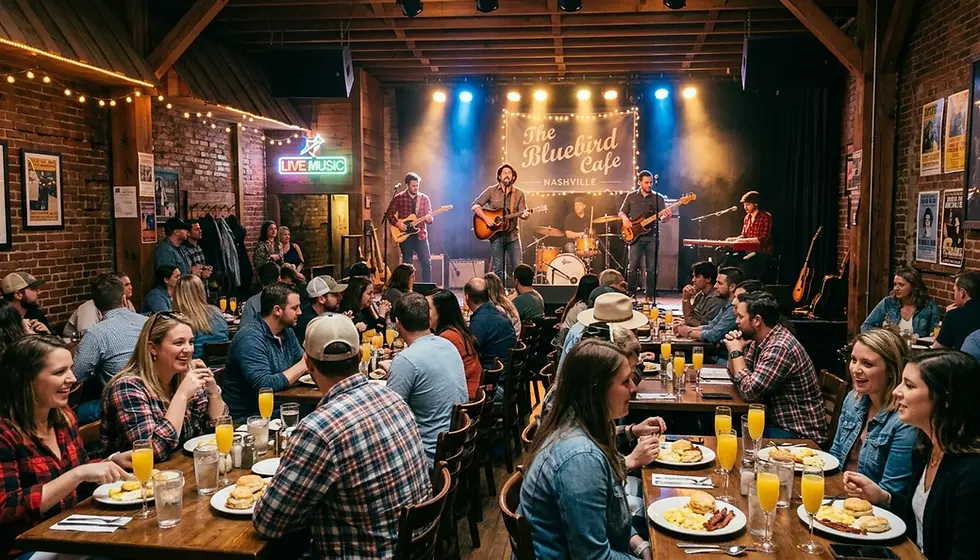
Printer's Alley Nashville TN currently anchors around three main live music and bar venues, each with a distinct personality. The alley's venue lineup has shifted over the years, and several spots that appear in older travel guides have closed or changed names. The following are verified open venues as of 2026, confirmed through current listings and the Downtown Nashville Partnership.
Skull's Rainbow Room (222 Printers Alley)
Skull's Rainbow Room is the alley's most historically significant venue, founded in 1948 by David "Skull" Schulman at 222 Printers Alley. The club has hosted jazz, blues, burlesque, country, and rock over seven decades. After Schulman's murder in 1998, the venue went through a lengthy period of uncertainty before reopening with its original name and character largely intact. Today it runs live jazz and blues alongside a revived burlesque program on select nights. Expect a cover charge on live music nights, typically in the $10-15 range on weekends. The interior retains a genuinely vintage lounge feel, exposed brick, low lighting, and tight table arrangements that make it better suited to pairs and small groups than large bachelorette parties.
Bourbon Street Blues and Boogie Bar (220 Printers Alley)
Bourbon Street Blues and Boogie Bar at 220 Printers Alley brings a New Orleans-influenced energy to Nashville's oldest entertainment block. The venue books live blues throughout the day, making it one of the few spots in Nashville where you can catch afternoon live music without paying a cover. B.B. King and James Brown have performed on this stage. The no-cover-during-the-day policy makes Bourbon Street the right choice if you want to explore the alley before dinnertime without committing to a ticketed show.
Alley Taps (162 Printers Alley)
Alley Taps at 162 Printers Alley books live music seven days a week, which is notable in a city where many venues take Monday and Tuesday off. The venue skews younger and louder than Skull's, with a broader musical range and a more relaxed door policy. If your group wants live music every night of the week without planning around a festival schedule, Alley Taps delivers that consistency.
Nearby Additions Worth Noting
Lonnie's Western Room at 308 Church St. is widely recognized as the top karaoke venue in Tennessee. Ms. Kelli's at 207 Printers Alley offers a similar karaoke experience with an extensive song catalog. Both are popular late-night destinations for groups who have finished their Broadway circuit and want something participatory rather than performative. For groups planning a bachelorette weekend, pairing Skull's for atmosphere and Lonnie's for karaoke hits both marks in a single evening without leaving the block.
What Do You Need to Know Before Visiting Printer's Alley at Night?
Visiting Printer's Alley Nashville TN requires a bit more situational awareness than Broadway, not because it is dangerous, but because it operates differently. The alley is narrower, darker, and less obviously policed than the main tourist corridor. Understanding practical logistics before you arrive makes the difference between a smooth night and a frustrating one.
Parking Near Printer's Alley
The alley has no dedicated parking. Your best options are the paid garages on 4th Avenue North and the surface lots near Church Street, where rates typically run $10-20 for an evening depending on demand and events. Weekend nights during CMA Fest or Bridgestone Arena events push those rates significantly higher. Street parking on 3rd and 4th Avenues North is limited and subject to metered enforcement until 8pm. Most visitors arriving from outside downtown find that parking once near Broadway or in the Gulch and walking covers the entire entertainment district more efficiently than moving the car between stops.
Rideshare pickup and dropoff in the alley itself can be challenging because the narrow corridor does not accommodate cars easily. Drivers typically stop on 3rd or 4th Avenue, which adds a short walk on either end. Plan for that when coordinating group transportation.
Best Times to Visit and Crowd Patterns
Thursday through Saturday nights represent the alley's peak, with most venues filling up by 9-10pm. Weeknights, particularly Sunday through Wednesday, offer a noticeably calmer atmosphere. If you want to actually have a conversation at Skull's or explore the architectural details of the block without navigating a crowd, a Tuesday or Wednesday visit delivers the same venues at a fraction of the energy.
Afternoon visits are underrated. Bourbon Street Blues and Boogie Bar starts live music early in the day, and the block is genuinely quiet before 6pm. You can photograph the historic facades, read the plaques, and understand the layout without competing for sidewalk space. The Nashville Scene's nostalgic history piece on the alley is worth reading before you go, it adds context that makes the afternoon walk significantly richer.
Budget and Cover Charges
Plan for drink prices in the $10-15 range at the main music venues, comparable to Broadway but slightly lower at the smaller bars. Cover charges on live music nights run $5-15 depending on the act and the day of the week. Some venues collect a cover at certain hours but not others. Alley Taps tends to have the most flexible entry policy. Skull's charges more consistently on nights with headlining acts or burlesque shows. Cash is useful here. Several alley venues have card readers, but service can be slow during peak hours and having cash avoids delays.
Safety and Practical Tips
The alley's history includes real crime, most notably the 1998 murder of David Schulman. That said, in 2026 the block is a functioning entertainment district with regular foot traffic during operating hours. Standard urban common sense applies: stay aware of your surroundings, keep valuables secure, and stick to well-lit areas when walking back toward Broadway. The short distance between the alley and the main tourist corridor means you are never far from a busier, more heavily populated street.
Solo female travelers should be aware that the alley is narrower and less immediately visible from main streets than Broadway. Visiting with at least one companion is the practical choice for late-night visits, particularly after midnight. Groups have a natural safety advantage here and tend to have better experiences anyway given the intimate venue sizes.

How Does Printer's Alley Fit Into a Downtown Nashville Itinerary?
Printer's Alley fits best as a complement to a broader downtown Nashville itinerary rather than a standalone destination. The block covers a small geographic area, and realistically you can walk the full length of the alley in under five minutes. What makes it worth building around is the concentration of history and the specific type of entertainment it offers, intimate live music and genuine nightclub atmosphere that Broadway's stadium-scale venues cannot match.
A practical day itinerary might look like this: spend the afternoon at the Country Music Hall of Fame and Museum, which covers Nashville's music heritage comprehensively, then walk north through downtown to reach Printer's Alley by early evening. Grab dinner at one of the nearby dining options, then cycle through two or three of the alley's venues before walking south to Broadway for the later-night honky-tonk experience.
Groups staying at the Luxe Cowgirl 538, a two-bedroom western-themed apartment sleeping up to 8 guests just steps from Broadway, can reach Printer's Alley on foot in under 10 minutes. For groups who want to cover both the Ryman Auditorium, 0.3 miles from that property, and the alley in the same evening, the logistics work cleanly. Check the Ryman schedule here before finalizing your itinerary, a show night at the Ryman pairs naturally with a post-concert walk to the alley.
The Nashville attractions and things to do guide from Stay Nashville covers additional downtown stops that pair well with an alley visit, particularly for first-time visitors trying to build a full multi-day itinerary.
What Makes Printer's Alley Architecturally Significant?
Printer's Alley Nashville TN represents one of the few surviving 19th-century commercial streetscapes in downtown Nashville. The district was listed on the National Register of Historic Places on August 26, 1982, under reference number 82003964, recognizing three specific architectural styles present in its buildings: Italianate, Queen Anne, and Romanesque. Most of the structures date from the mid-to-late 1800s, when the printing trade drove construction of solid, multi-story brick commercial buildings designed for heavy equipment and long-term use.
The alley's physical character sets it apart from the surrounding downtown blocks, which have been substantially redeveloped over the past two decades. Nashville's hotel and office construction boom, which drove hotel RevPAR growth and a 3.4% increase in hotel supply according to 2026 data from the Nashville Convention and Visitors Corp, has reshaped most of downtown's skyline. Printer's Alley has largely been insulated from that pressure by its narrow footprint, historic designation, and the economic calculus of preserving functioning entertainment venues rather than demolishing them for new construction.
The alley's position as both the site of the city's first parking garage and its first skyscraper adds an odd footnote to its architectural legacy. The block that became known for speakeasies and burlesque was also, for a moment, the leading edge of Nashville's vertical ambitions.
Frequently Asked Questions About Printer's Alley Nashville TN
What are the current hours for venues in Printer's Alley Nashville TN?
Most Printer's Alley venues operate from late afternoon through 2-3am on weekends. Bourbon Street Blues and Boogie Bar at 220 Printers Alley starts live music earlier in the day than most competitors. Skull's Rainbow Room and Alley Taps typically pick up in the 7-9pm range. Hours shift based on the day of week, with weeknights running shorter than weekend nights. Confirm current hours directly with each venue before visiting, as schedules change seasonally and around major Nashville events like CMA Fest.
How much should I budget for a night in Printer's Alley?
A realistic budget for a night at Printer's Alley runs $40-80 per person, covering two to three drinks at $10-15 each plus potential cover charges of $5-15 at music venues on weekend nights. Weeknight visits typically cost less, as cover charges are lower or waived at some venues. Add transportation costs if you are arriving by rideshare. Cash is advisable since some smaller bars process cards slowly during peak hours.
Is Printer's Alley safe to visit at night?
Printer's Alley is an active entertainment district and generally safe during operating hours when other visitors are present. The alley is narrower and less immediately visible from main streets than Broadway, so standard awareness is wise. Visit with at least one companion for late-night trips, particularly after midnight when the block empties. The short walk to Broadway's heavily trafficked corridor means you are never isolated. The Nashville Convention and Visitors Corp identifies the downtown area broadly as one of the city's highest-traffic visitor zones.
Can I walk to Printer's Alley from Broadway?
Yes. Printer's Alley sits approximately 0.3-0.4 miles north of Lower Broadway, a 5-8 minute walk through downtown streets. The route runs north on 3rd or 4th Avenue from Broadway to Union or Church Street, where the alley entrance is clearly marked. The walk is flat and straightforward, though heels on cobblestones at midnight can extend that time considerably. Most visitors prefer to walk rather than wait for a rideshare over such a short distance.
What is the difference between Printer's Alley and the Broadway honky-tonk district?
Printer's Alley and Broadway are separate entertainment zones with distinctly different characters. Broadway is a wide commercial strip with large-scale tourist-facing honky-tonks, rooftop bars, and venues that hold hundreds of people. Printer's Alley is a narrower historic district with smaller, older venues seating 50-150 guests, a stronger emphasis on jazz and blues, and decades more history behind each address. Broadway was largely redeveloped in the 2000s and 2010s; Printer's Alley has preserved its 19th-century architectural fabric under a National Register of Historic Places designation dating to 1982.
What famous musicians performed in Printer's Alley?
The list of musicians who performed in Printer's Alley reads like a Nashville Hall of Fame roll call. Confirmed performers include Chet Atkins, Floyd Cramer, Hank Garland, Jimi Hendrix, Boots Randolph, Jeannie Seely, The Supremes, Ernie Terrell, Mel Tillis, Dottie West, Hank Williams, Waylon Jennings, and Barbara Mandrell. Paul McCartney referenced the alley directly in his 1974 song "Sally G.," released as a B-side on the Junior's Farm single. The alley's peak performance era ran from the late 1940s through the 1970s, coinciding with the Nashville Sound's rise as a nationally dominant music genre.
What is the best time of year to visit Printer's Alley in Nashville?
Printer's Alley is an indoor-focused destination, making it enjoyable year-round. Spring and fall offer the most comfortable walking conditions between venues. Summer visits during CMA Fest in June bring the largest crowds and highest prices citywide, including at the alley, so book accommodations and plan budgets accordingly. Winter weekday visits offer the quietest experience with shorter waits and more direct access to bar staff. Nashville welcomed a record number of visitors in 2026 according to Tourism Economics data cited by Visit Music City, so even off-peak seasons carry meaningful foot traffic downtown.
Is Printer's Alley family-friendly?
Printer's Alley is primarily a late-night adult entertainment district and is not well-suited to visits with young children, particularly after 7pm. The venues serve alcohol, and several feature burlesque or other adult-oriented entertainment on select nights. Afternoon visits to see the historic architecture and exterior of the buildings are appropriate for all ages. Families with children planning a broader Nashville trip will find better daytime options at the Adventure Science Center or the Ryman Auditorium's daytime tours before pivoting to Printer's Alley after the kids are settled for the evening.
Plan Your Nashville Stay Near Printer's Alley
Printer's Alley Nashville TN rewards visitors who arrive with context and leave time for more than one venue. The half-block corridor packs more genuine Nashville music history into its footprint than most of Broadway does across a dozen blocks. In 2026, with Nashville's hotel supply up and visitor arrivals at record levels according to Tourism Economics data from Visit Music City, the alley remains one of downtown's most authentic counterweights to the tourist-facing entertainment machine.
Start with the historical orientation before you walk in. Read the Nashville Scene's reporting on Skull's, understand which buildings were printing houses and which became speakeasies, and arrive early enough to photograph the Italianate facades before the crowd fills the sidewalk. Plan two or three venues in one visit rather than rushing through five. The alley is small enough that a genuinely good night means going deep on two stops rather than shallow on six.
If you are visiting from out of town, placing your accommodations close to downtown makes the logistics of combining Printer's Alley, Broadway, and the Ryman Auditorium into a single cohesive evening much simpler. For groups of four, the Luxe Loft SoBro 916 on Stay Nashville puts you 3 blocks from Broadway and within easy walking distance of the alley. Larger groups planning a bachelorette weekend should look at the Underwood Manor, a rustic modern farmhouse 5 minutes from downtown with a speakeasy-style game room that genuinely fits the Printer's Alley vibe, a pool table, karaoke machine, and Pac-Man arcade in the same space. For the full Nashville group experience, check all available properties at Stay Nashville's vacation homes.

Underwood Manor's speakeasy game room, complete with a pool table, whiskey barrel bar, and moody dark-green walls, channels the same underground club energy that made Printer's Alley famous in the 1940s. After a night in the alley, coming back to a space that feels like it belongs in the same era is not a bad way to end things. Check availability at Underwood Manor for your Nashville dates.

Comments