Nashville Tennessee Printers Alley: History, Nightlife & Visitor Guide


Printers Alley in Nashville, Tennessee is a narrow, half-block corridor tucked between Third and Fourth Avenue North, running from Union to Church Street in the heart of downtown. Listed on the National Register of Historic Places since 1982, the alley packs roughly 200 years of Nashville history into approximately 5 acres: printing empires, Prohibition speakeasies, gangster-owned nightclubs, and a current live-music scene that draws visitors and locals alike every night of the week.
Nashville Tennessee Printers Alley is located between 3rd and 4th Avenue North, running between Union and Church Street in downtown Nashville.
The alley was added to the National Register of Historic Places on August 26, 1982 (NRHP reference No. 82003964), recognizing its Italianate, Queen Anne, and Romanesque architecture.
By 1915, the corridor housed two major newspapers, 10 print shops, and 13 publishers; the last printing company left in 1977.
During Prohibition, the alley became a speakeasy district; Tennessee repealed Prohibition in 1937, four years after the national repeal.
Musicians including Chet Atkins, Hank Williams, Waylon Jennings, Jimi Hendrix, and The Supremes all performed in the alley.
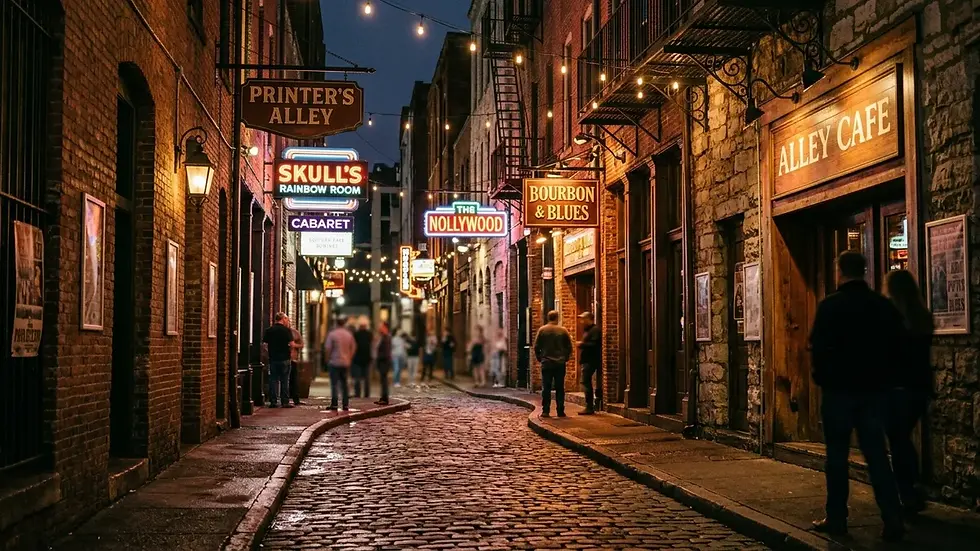
Current anchor venues include Skull's Rainbow Room at 222 Printers Alley, Bourbon Street Blues and Boogie Bar at 220 Printers Alley, and Alley Taps at 162 Printers Alley.
TL;DR
Printers Alley is Nashville's most historically layered entertainment district, not just another tourist bar strip.
The alley's printing industry roots date to the 1830s; its nightclub era began in the 1940s under gangster ownership.
Architecture reflects three distinct styles: Italianate, Queen Anne, and Romanesque, all visible within the same short block.
The best time to visit is Thursday through Saturday evening, when most venues have live music; weeknights offer a quieter walk-through for history enthusiasts.
Printers Alley sits about 8 minutes on foot from Lower Broadway, making it a natural add-on to any downtown Nashville itinerary.
Skull's Rainbow Room, founded in 1948, is the venue most worth your time, combining jazz, burlesque, and a genuinely haunted backstory.
What Is Printers Alley in Nashville Known For?
Nashville Tennessee Printers Alley is known simultaneously for three things: its 19th-century printing industry heritage, its underground Prohibition-era speakeasy culture, and its current identity as a concentrated live-music and nightlife district operating within a block of preserved historic architecture. No other street in Nashville carries that triple identity. The alley sits on the Nashville Downtown Partnership's official heritage trail and draws both history-focused day visitors and nightlife crowds after 9pm.
The printing connection is the foundation. Starting around 1830, the corridor became Nashville's publishing center. By 1915, two major newspapers operated from the block: The Tennessean and The Nashville Banner. Ten print shops and 13 publishers filled the surrounding buildings. The physical scale of that industry shaped the architecture still standing today. Heavy masonry construction, large street-level loading bays, and multi-story facades built to house printing presses define the streetscape. The last printing company, Ambrose Printing Company, did not leave until 1977, meaning the alley's industrial character persisted well into living memory.
The nightlife reputation runs equally deep. During Prohibition, the alley's proximity to the Davidson County courthouse made it a natural location for speakeasies catering to legal professionals and city officials. When Tennessee repealed Prohibition in 1937 (four years after the national repeal, according to the Tennessee State Library and Archives), the district pivoted into legitimate nightclubs. By the late 1940s, it was one of the most concentrated entertainment districts in the American South.
What Is the Full History of Nashville Tennessee Printers Alley?
The history of Nashville Tennessee Printers Alley begins in the 1780s, when Virginia businessman George Michael Deadrick gifted the land to the city of Nashville. Before printing arrived, the narrow passage served a purely practical purpose: men hitched horses here when visiting the nearby courthouse. By the late 19th century, the area had evolved into what residents called "the Men's Quarter," a dense cluster of hotels, gambling halls, saloons, restaurants, and brothels serving the courthouse crowd.
The Printing Era: 1830 to 1977
The printing industry arrived around 1830 and transformed the alley's identity completely. Nashville's position as a regional distribution center made it a logical hub for publishing, and the alley's central location reduced delivery distances for newspaper subscribers and commercial clients. The 1915 peak, when two daily newspapers, 10 print shops, and 13 publishers operated simultaneously, represented the industry's high-water mark. The buildings constructed during this period reflect the architectural ambitions of prosperous publishers: Italianate facades with decorative cornices, Queen Anne details on upper floors, and Romanesque arched entries on the heaviest commercial structures. Visitors who look up rather than straight ahead will spot all three styles within a single block.
The National Park Service's NRHP listing for the Printers Alley Historic District, entered August 26, 1982, specifically cites this architectural variety as a primary reason for designation. The reference number is 82003964. Preservationists were working against time: by the early 1980s, several buildings had already been altered or were at risk of demolition as downtown Nashville shifted economically.
Prohibition, Speakeasies, and the Underground Years
Tennessee enacted Prohibition in 1909, a full decade before the national amendment. The alley's established network of basement rooms and rear entrances made it structurally suited for underground bars. Speakeasies replaced saloons almost seamlessly. When Tennessee repealed Prohibition in 1937, the legal alcohol market returned, but state law initially prohibited selling alcohol by the glass. Nashville's solution was the "mixer bar": customers brought their own liquor, and bartenders provided ice, mixers, and glasses for a fee. This workaround kept the alley's nightclub culture alive through the late 1930s and 1940s. Full alcohol legalization in Nashville did not arrive until 1968, and when it did, the effect was counterintuitively negative. The legal mainstream bar industry expanded across the city, reducing the alley's competitive advantage as an underground destination.
The Gangster Era: 1940s Nightclubs
The 1940s brought the alley's most colorful and most dangerous era. Gangsters Jimmy Washer, James "Slow" Barnes, Bob Carny, and David "Skull" Schulman opened venues combining fine dining, burlesque dancing, and live music in a format that would be recognizable today as dinner theater. The venues they ran, including The Captain's Table, The Brass Rail Stables, The Embers, The Black Poodle Lounge, the Voo Doo Lounge, and Schulman's Rainbow Room, attracted audiences from across the South. Burlesque performers Dixie Evans, Shannon Doah, and Kitten Natividad performed regularly.
As Nashville Scene journalist Randy Fox documented in a detailed 2013 retrospective, the alley during this period operated in a legal gray zone that attracted both artistic talent and organized money. The combination proved magnetic for musicians: Chet Atkins, Floyd Cramer, Hank Garland, Jimi Hendrix, Boots Randolph, Jeannie Seely, The Supremes, Ernie Terrell, Mel Tillis, Dottie West, Hank Williams, Waylon Jennings, and Barbara Mandrell all performed here. Paul McCartney referenced the alley directly in his 1974 song "Sally G.," released as the B-side to "Junior's Farm" by Paul McCartney and Wings.

Is Printers Alley Worth It? Current Venues and What to Expect
Yes, Nashville Tennessee Printers Alley is worth visiting, but the experience depends heavily on what you are looking for and when you arrive. For history enthusiasts, the architectural streetscape and venue backstories reward even a slow Tuesday afternoon walk. For nightlife seekers, Thursday through Saturday evenings are when the district genuinely comes alive, with live music at multiple venues simultaneously and a crowd mix of tourists and locals who specifically prefer the alley's more contained atmosphere over Lower Broadway's overwhelming scale.
Skull's Rainbow Room (222 Printers Alley)
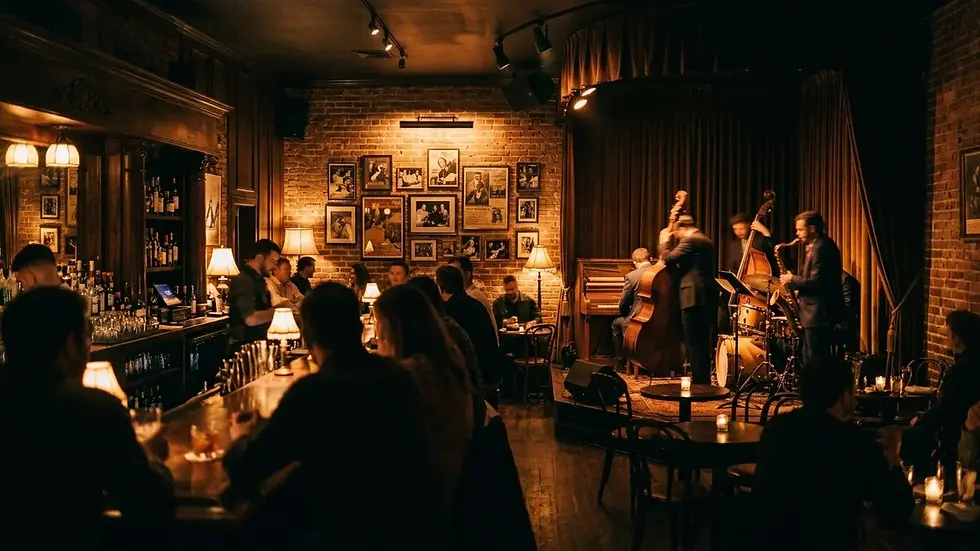
Skull's Rainbow Room is the venue that defines the alley's identity in 2026. Founded in 1948 by David "Skull" Schulman, the room started as a striptease venue and evolved through jazz, blues, burlesque, country, and rock and roll across five decades. Schulman was murdered by two robbers in 1998, shortly before the club was due to open for the evening. The current operators preserved the name and the vintage aesthetic intentionally. The interior features original booths, low lighting, and a performance stage that has seen more music history than most dedicated concert halls. Come for the jazz performances on weekend nights; the cocktail list skews classic rather than trendy. Book a table in advance on weekends because walk-in seating disappears by 9pm.
The ghost angle is not just a marketing gimmick. According to Nashville Scene's investigative piece on the venue's reopening, longtime staff and performers have reported experiences they attribute to Schulman's presence since the 1998 murder. Whether you find that compelling or not, the history is real and the atmosphere it creates is unlike anything else in Nashville.
Bourbon Street Blues and Boogie Bar (220 Printers Alley)
Bourbon Street Blues and Boogie Bar is the alley's most straightforward live-music recommendation for a first visit. Themed after New Orleans with Cajun-influenced food, signature cocktails, and blues performances that start earlier in the evening than most venues, it is accessible without requiring advance knowledge of the alley's history. B.B. King and James Brown have performed on this stage. Order the Cajun dishes over the bar food and arrive by 8pm on weekends to avoid the cover charge lines that form after 9pm.
Alley Taps (162 Printers Alley)
Alley Taps runs live music seven days a week in a speakeasy atmosphere, making it the most reliably active venue in the corridor on weeknights when other spots scale back programming. The craft beer selection is stronger than most alley venues, and the space is smaller, which means better sight lines to the stage. If you are visiting on a Monday or Tuesday and want guaranteed live music, this is where to start.
Other Venues Worth Knowing
Lonnie's Western Room at 308 Church Street operates on the edge of the district and holds a reputation as the top karaoke venue in Tennessee, where servers perform alongside customers. Ms. Kelli's at 207 Printers Alley focuses specifically on karaoke with an extensive song catalog, making it the better choice if participation rather than watching is the goal.
For food near the alley, Gray and Dudley inside the 21c Museum Hotel at 221 2nd Ave. N. is the highest-quality dining option within a short walk, with a menu that reflects the hotel's art-focused identity. The Stillery at 113 2nd Ave. N. is the practical choice for groups: mason jar cocktails, brick-fired pizza, and a layout that handles large parties without reservation chaos.
Is Printers Alley the Same as Broadway?
No, Nashville Tennessee Printers Alley is not the same as Broadway, though the two districts are closely connected by Nashville's downtown street grid. Lower Broadway, the neon-lit honky-tonk corridor most visitors picture when they think of Nashville nightlife, runs east to west along Broadway between 1st and 5th Avenue. Printers Alley runs north to south on a parallel course, approximately 8 minutes on foot from the heart of Lower Broadway. The two districts attract overlapping audiences but offer genuinely different experiences.
Broadway is louder, larger, and designed for maximum tourist throughput. Cover bands play country classics on multiple floors of venues that seat hundreds at a time. The energy is relentless and the crowds on weekend nights are genuinely difficult to navigate. Printers Alley is narrower, darker, and more historically grounded. The venues seat fewer people, the music programming varies more widely (jazz, blues, burlesque alongside country), and the architecture creates an intimacy that Broadway's wide open facades cannot replicate.
The practical advice: start your Nashville evening on Broadway, then walk to Printers Alley after 10pm when Broadway becomes overwhelming. The contrast between the two districts, experienced back to back, gives you a much fuller picture of Nashville's entertainment history than either district alone. Groups staying at Underwood Manor, located about 2 miles from downtown, can reach both districts in a single $7-10 Uber ride and treat them as two chapters of the same evening rather than two separate outings.
What Is Taylor Swift's Favorite Place in Nashville?
Taylor Swift's documented Nashville connections center on the Bluebird Cafe in Green Hills, the Ryman Auditorium, and the Music Row studio corridor where she recorded her early albums, rather than Printers Alley specifically. The Bluebird Cafe at 4104 Hillsboro Pike is the venue most directly associated with her Nashville origin story: she performed there as a teenager and was discovered by a record executive during one of those early shows. The Ryman, located at 116 5th Ave N, is where she has returned for milestone performances throughout her career.
Printers Alley's connection to celebrity history runs through an earlier generation of music royalty. The alley's verified performer list includes Hank Williams, Chet Atkins, Waylon Jennings, and Jimi Hendrix. For Swift fans visiting Nashville in 2026, the more relevant pilgrimage sites are the Bluebird Cafe, RCA Studio B on Music Row (open for tours), and the Country Music Hall of Fame, which holds extensive documentation of her early Nashville career. That said, any complete Nashville downtown visit benefits from including Printers Alley, because the alley's history explains the musical infrastructure that made Nashville the city where artists like Swift could build careers in the first place.
What Are the Best Practical Tips for Visiting Printers Alley?
Visiting Nashville Tennessee Printers Alley successfully requires a few logistics decisions that most travel guides skip entirely. The alley is genuinely different depending on when you arrive, how you get there, and which venues you prioritize.
Best Time to Visit
Thursday through Saturday evenings from 9pm onward represent peak programming across most venues. If you want live music at multiple stops without planning ahead, this is the window. Sunday through Wednesday, the district is noticeably quieter; Alley Taps is the most reliable choice for live music on off-nights. Daytime visits are ideal for architecture and history: the narrow street reads completely differently without nighttime crowds, and you can examine the Italianate and Romanesque building details at eye level without navigating around pedestrian traffic.
Getting There and Parking
The alley sits within easy walking distance of most downtown Nashville hotels, approximately 8-10 minutes on foot from Lower Broadway. For groups staying outside downtown, rideshare is the practical choice: a typical Uber from midtown Nashville neighborhoods runs $7-12 to the alley entrance. Parking in the immediate area is limited to paid garages along 4th Avenue; street parking on Church Street occasionally opens on weeknight evenings but is essentially unavailable on weekends. Budget $15-25 for garage parking if you drive.
Cover Charges and Dress Code
Most Printers Alley venues charge covers of $5-15 on Thursday through Saturday nights, typically applied after 9pm. Skull's Rainbow Room charges slightly higher for ticketed performances and burlesque shows; check their schedule before arriving and buy tickets online when available. The dress code across most venues skews smart-casual; the alley draws a slightly older crowd than Lower Broadway and the ambiance rewards dressing up slightly over the Broadway standard of boots and a hat. Heels are common but the cobblestone-adjacent surfaces at the alley's main entrance can be challenging after rain.
Safety and Group Logistics
The alley itself is active and well-lit on busy nights. The surrounding blocks of 4th Avenue and Church Street are standard downtown Nashville, well-covered by foot traffic on weekends. Groups larger than 8-10 people should call ahead to Skull's Rainbow Room or Bourbon Street Blues and Boogie Bar to confirm seating availability, particularly on Friday and Saturday nights. Venues in the alley generally cannot accommodate walk-in large groups without a wait after 10pm. Splitting into smaller groups and meeting inside is more practical than trying to move 12 or 15 people through the narrow alley entrance together.
What Does the Haunted History of Printers Alley Actually Include?
The haunted reputation of Nashville Tennessee Printers Alley centers on two specific documented events: the 1998 murder of David "Skull" Schulman and the decades of violent, underground activity that preceded it. Paranormal claims about the alley are not fabrications layered onto an otherwise quiet history. The alley's actual history, documented by The Tennessean and Nashville Scene across multiple decades, provides the foundation that makes the ghost stories credible to anyone familiar with the backstory.
David Schulman founded the Rainbow Room at 222 Printers Alley in 1948 and operated it for 50 years. He was murdered by two robbers in 1998, shortly before opening time, in the venue he had run for half a century. Staff who worked at the Rainbow Room after it reopened as Skull's Rainbow Room (honoring his nickname) have described lights flickering, unexplained sounds from the stage area, and a general sense of presence in the back rooms where Schulman spent most of his time. Whether you take those accounts literally or not, the venue's documented history gives the atmosphere genuine weight.
Beyond Skull's, the alley's pre-Prohibition era as "the Men's Quarter" contributed decades of what would have been, by modern standards, extraordinary activity: gambling, prostitution, and the kind of transactional violence that accompanied both. The courthouse proximity meant bail bondsmen and lawyers moved through the same narrow space as the establishments' less legitimate operators. The layered history is part of what makes the alley's current presentation as a mainstream entertainment district feel slightly surreal to anyone who looks past the neon signs at the architecture behind them.
How Does Printers Alley Fit Into a Broader Nashville Itinerary?
Nashville Tennessee Printers Alley works best as part of a downtown itinerary that connects the city's music heritage with its history. The alley is approximately 0.7 miles from the Ryman Auditorium on foot, making the two a natural pairing for an afternoon that starts with a Ryman backstage tour and ends with dinner in the alley. The Country Music Hall of Fame is about 0.8 miles south, walkable in 15 minutes. Combining all three creates a full-day downtown experience that covers Nashville's performing arts history in three distinct formats: the concert hall, the museum, and the street-level nightclub district.
Groups who want to experience both Lower Broadway and Printers Alley in the same evening should plan for Broadway from roughly 7pm to 9:30pm, then walk north and east to the alley for the later portion of the night. The walk takes about 8-10 minutes through the downtown grid. This sequencing works because Broadway venues front-load their energy early in the evening while Printers Alley venues tend to hit their stride later.
For bachelorette groups and larger parties looking to make the most of the Nashville nightlife circuit, planning your accommodation around Broadway access pays dividends across the whole trip. Properties located within a short rideshare of downtown allow the group to return between the Broadway and Printers Alley portions of the evening without logistics becoming the dominant concern. The Luxe Cowgirl 538, a two-bedroom downtown loft just three blocks from Broadway, puts you within a 10-minute walk of the Ryman Auditorium and a similar distance from the alley's entrance, which is hard to beat for groups of up to 8 who want maximum walkability.
For larger groups, the Ultimate Bach Pad's dual duplex layout with 8 bedrooms, two rooftop decks, and room for 24 guests sits about 8-10 minutes from Broadway by rideshare. The rooftop deck skyline views function as a pre-game option before the group heads to Printers Alley for the main event, which keeps the evening's energy building rather than peaking too early.
Frequently Asked Questions About Nashville Tennessee Printers Alley
What are the best venues in Printers Alley right now?
In 2026, the three strongest venues in Nashville Tennessee Printers Alley are Skull's Rainbow Room at 222 Printers Alley (best for atmosphere and history, book tables in advance for weekend shows), Bourbon Street Blues and Boogie Bar at 220 Printers Alley (best for first-timers, with Cajun food and early-evening live blues), and Alley Taps at 162 Printers Alley (best for weeknight visits, with live music seven days a week in a speakeasy setting). Lonnie's Western Room at 308 Church Street is the top choice specifically for karaoke.
How long should you spend at Printers Alley?
Plan for 2-3 hours minimum if you intend to visit two or more venues. A purely historical daytime walk-through of the exterior architecture takes 30-45 minutes. Evening visits benefit from arriving by 9pm and staying through at least one full live music set at Skull's Rainbow Room or Bourbon Street Blues and Boogie Bar, which typically run 45-60 minutes each. Most visitors find the district works best as a later stop, after dinner and an initial Broadway experience.
Is Printers Alley free to enter?
Walking through Nashville Tennessee Printers Alley as a public street is free at any time of day. Individual venues charge covers of $5-15 on Thursday through Saturday evenings, typically applied after 9pm. Ticketed events like burlesque shows at Skull's Rainbow Room cost more and require advance purchase. Daytime visits with no venue entry are completely free.
What is the difference between Printers Alley and Lower Broadway?
Lower Broadway runs east to west and is Nashville's largest honky-tonk corridor, with multi-floor venues hosting cover bands for tourist-scale crowds. Nashville Tennessee Printers Alley runs north to south a few blocks away and offers a more historically grounded, smaller-scale experience with venues focused on jazz, blues, and burlesque alongside country. The alley is typically less crowded, more architecturally distinctive, and draws a slightly older demographic than Broadway on the same nights.
How do you get to Printers Alley from Lower Broadway?
From the heart of Lower Broadway, walk north on 4th Avenue North for approximately 8-10 minutes to reach the Church Street entrance of Printers Alley. Alternatively, rideshare from anywhere on Broadway delivers you to the alley in 3-5 minutes by car. There is no direct shuttle service between the two districts, but the walking route through downtown Nashville is well-lit and straightforward.
Did famous musicians really perform in Printers Alley?
Yes. Documented performers at Nashville Tennessee Printers Alley include Chet Atkins, Hank Williams, Waylon Jennings, Jimi Hendrix, Floyd Cramer, Hank Garland, Boots Randolph, Jeannie Seely, The Supremes, Ernie Terrell, Mel Tillis, Dottie West, and Barbara Mandrell. Paul McCartney referenced the alley by name in his 1974 song "Sally G.," released as the B-side of "Junior's Farm" by Paul McCartney and Wings. The alley's gangster-owned nightclubs of the 1940s and 1950s actively recruited national talent to compete with Nashville's more mainstream venues.
Is Printers Alley safe to visit?
Nashville Tennessee Printers Alley is an active entertainment district within downtown Nashville and carries the same general safety profile as the surrounding downtown area. The alley itself is well-lit and busy on Thursday through Saturday nights, with venue staff and pedestrian foot traffic creating natural activity throughout the evening. Standard urban precautions apply: use rideshare rather than walking extended distances late at night, keep your group together when moving between venues, and avoid leaving valuables visible in parked vehicles. The immediate surrounding blocks of Church Street and 4th Avenue are standard downtown Nashville.
When was Printers Alley added to the National Register of Historic Places?
Printers Alley was added to the National Register of Historic Places on August 26, 1982, under reference number 82003964. The designation recognizes the district's architectural significance, specifically its collection of Italianate, Queen Anne, and Romanesque commercial buildings, as well as its historical importance to Nashville's printing and publishing industry from the 1830s through 1977.
Ready to Explore Nashville's Historic Nightlife Districts?
Nashville Tennessee Printers Alley rewards visitors who come prepared. Know which venues match your evening's goal (jazz and history at Skull's Rainbow Room, blues and food at Bourbon Street Blues and Boogie Bar, reliable weeknight music at Alley Taps), plan for Thursday through Saturday if live music is the priority, and treat the architectural streetscape as part of the experience rather than just a backdrop. The alley's 200-year history from printing hub to speakeasy capital to current entertainment district makes it the most layered single block in Music City. According to the Nashville Convention and Visitors Corp, Davidson County drew 16.9 million visitors in 2026 generating record visitor spending. Most of those visitors spend time on Lower Broadway. Fewer make the 8-minute walk to Printers Alley, which is precisely why it still feels like a discovery worth making in 2026.

If you are planning a Nashville visit around the downtown nightlife circuit, Underwood Manor gives you a private speakeasy game room of your own to return to after the alley closes. The rustic modern farmhouse is located about 2 miles from downtown, making Broadway and Printers Alley equally reachable by rideshare in under 10 minutes. Check availability and see the full property details here.


Comments